Innovation management in complex medical care settings operates under a unique set of constraints, where progress is shaped not only by what is technically feasible, but by operational and safety considerations. This is where the theory of a new solution meets practical and critical realities, and where words like “responsible AI” and “AI governance” take on real meaning - especially if it is your life or that of your patient or family member that is at stake. While innovation can mean the possibility of survival and perhaps sales to some stakeholders, to others, it can mean unnecessary costs in terms of health risk or operational disruption. This report summarizes key lessons shared by innovator Julian Hong, MD who develops leading-edge AI solutions at the intersection of research and clinical care at UCSF Health, where he treats prostate cancer patients. His perspective highlights why innovation is often slowed by a lack of product–market fit, based on safety requirements, workflow complexity, and other constraints faced by implementation teams in large academic medical centers.
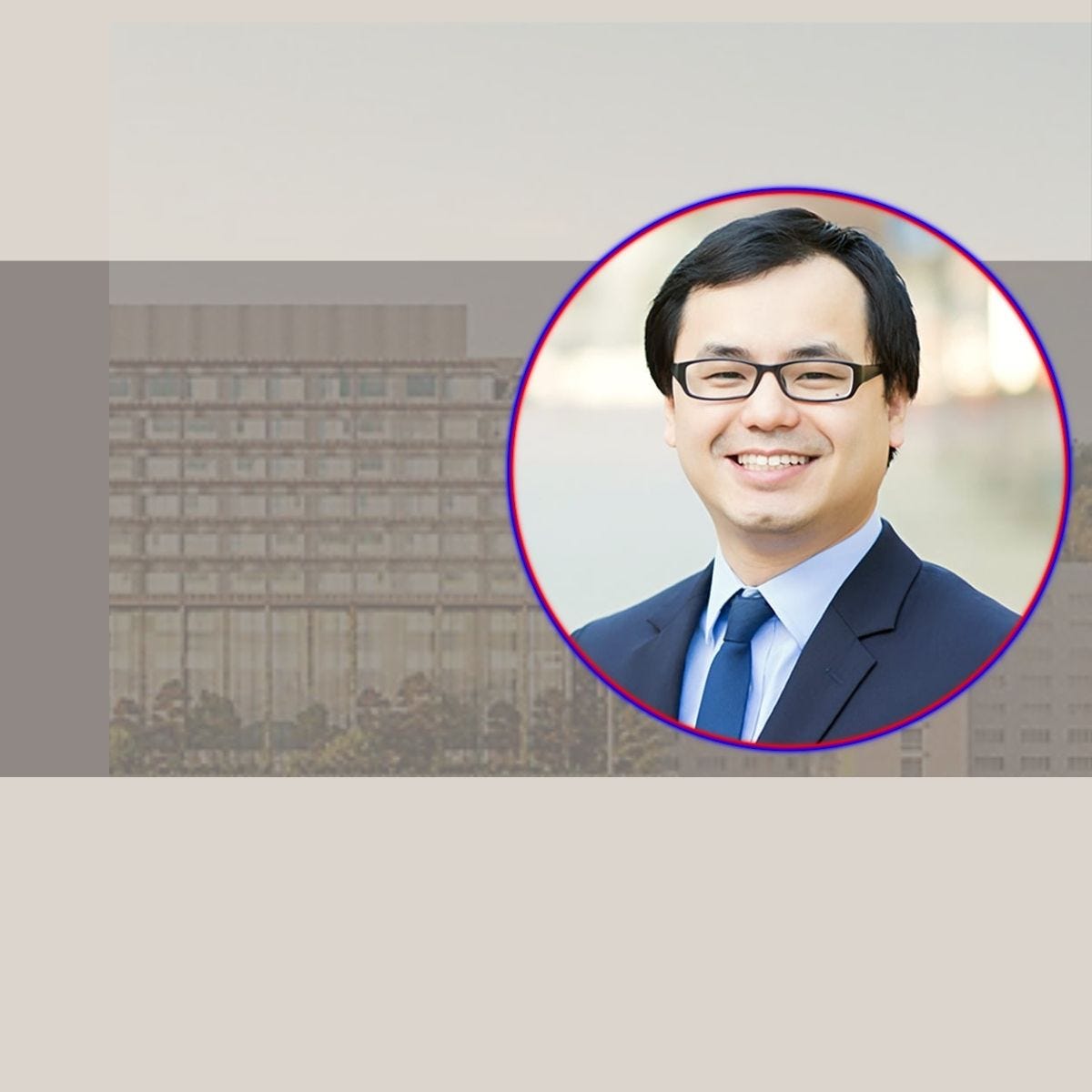
Julian Hong, oncologist, at the interface of computer science and medicine
Julian Hong, MD, associate professor of Radiation Oncology at UCSF, brings a unique combination of clinical, research and computational expertise to his work. Trained as an informaticist, he operates at the critical intersection of IT, medicine, and artificial intelligence, applying data-driven and AI-enabled approaches to complex clinical problems. He is among a very small group on a national, and global basis, with deep training spanning both data science and a medical subspeciality - in his case, radiation oncology. As a result of his expertise and proactive pursuit of applying data to solve challenges in treating patients with cancer, his work has earned national visibility, including his role as the UCSF co-principal investigator at the UCSF-Stanford Weil Research Hub, a $200 million initiative advancing precision health through cross-institutional collaboration. Working within an academic medical center, and one that happens to be located in the world’s center of AI innovation in San Francisco, he understands innovation management principles will shape the outcomes of emerging technologies. These include: (1) a culture of innovation; (2) providing resources for creating new approaches for the future; along with (3) the governance and administration needed to execute upon them in ways that meet the immediate priorities of the clinical teams.
Factors that shape innovation in AI at UCSF today
Hong joined the UCSF Bakar Computational Health Sciences Institute (BCHSI) in 2019. He was drawn to UCSF by the opportunity to work with mentor Atul Butte, MD, PhD, and a community of like-minded scientists at BCHSI, an environment created for the purpose of data-driven innovation in medical care. In describing the importance of working with a mentor and like-minded team members, he put it simply, implying that one has momentum in innovating when there is already a degree of momentum, explaining, in very practical terms:
“It buys you lead time in actually getting things done.”
In addition to the team and powerful computational resources provided at UCSF, Hong also revealed some of the constraints to innovation in AI. Some of these constraints, he believes, are a necessary part of judicious de-risking; others reflect product–market fit challenges that may ease as specialists in domains such as medicine and software development learn to collaborate and communicate more effectively.
Where innovation is gaining traction
Gathering a critical mass of like-minded scientists. The UCSF team attracted those with a combination of strong computational skills and an understanding of biology, not to mention a shared understanding of the vision - turning data into care. While there are relatively few clinicians with deep training in both medicine and informatics, on a national basis, UCSF has assembled one of the largest such communities in the country with nearly 120 faculty who are a part of the Bakar Computational Health Sciences Institute (BCHSI.) This concentration of hybrid expertise enables collaboration at scale and accelerates learning in a still-nascent field.
Accessing large, diverse data sets. UCSF, as part of UC Health, has access to some of the largest and most diverse patient data resources in the country, including more than 10 million de-identified patient records available through secure, high-functioning data warehouses. The scale and diversity of these datasets are critical for training reliable AI models, where both volume and representation of different types of people directly affect performance and validity.
Where innovation requires ongoing vigilance
Governing AI safely. Hong described a governance group led by Sara Murray, MD that evaluates clinical AI tools before implementation. They look at what is medically “safe” as well as what is operationally viable. This encompasses “fairness” (i.e. representation of different types of patients, and sufficient numbers of them), model reliability (i.e. when the model might break down and not act as expected based on what it “learns” in use) and other complex factors that determine outcomes in real world settings.
In terms of the importance of validation against large, diverse data sets, Hong provided a specific and recent example to drive home his point about fairness and representation, reiterating “AI is only as good as the data on which it is trained.” He discussed computationally assessing the ECOG* performance status, a risk assessment score - which is meant to help incorporate many metrics into a single number to give a physician a sense of a patient’s condition. However, they noted that the final score was influenced by race. The result, when determined computationally, was incorrect and misleading and revealed embedded bias in the underlying documentation.
Operational reliability. AI solutions offered by industry are not always aligned with the operational priorities of health systems. Implementing new software is complex and expensive, requiring coordination across clinical, operational, and IT teams. As a result, hospitals must be highly selective about where they focus their change efforts. As Hong notes, among the many urgent needs facing hospital teams, AI solutions are not always the most immediate or necessary. In addition, what proves effective in a lab or trial setting does not always translate to real-world clinical environments. For this reason, leaders evaluating AI investments must distinguish between efficacy—performance under controlled conditions—and effectiveness—performance in day-to-day clinical operations. Even when a technology is deemed safe and theoretically effective, pilot deployments are required to test whether this remains true at scale. In many cases, the cost and disruption associated with implementing relatively unproven AI technologies outweigh the benefits, particularly in systems optimized for patient safety, reliability, and cost control.
“AI is only as good as the data on which it is trained.”
Partnering with industry/product developers. Hong expressed the desire that industry (i.e. product developers) work to develop products specifically designed to address real problems in clinical care. He put it simply and starkly:
“Often the products and tools are mismatched.”
He attributed this, in part, to gaps in domain expertise, noting that there are fewer industry collaborations than expected:
“Medicine has been a hard nut for the AI industry to tackle. Maybe they don’t get the domain experts they need.”
Understanding the tradeoffs between training AI and training residents. Hong spoke to the challenges of determining how much of his teams’ efforts should be dedicated to “training AI” vs “training residents.” When he considers the time he “invests” in training AI as a natural part of his work as a proactive user of new technologies, he sees real trade offs in the time and effort he dedicates to training his students when he must also be training AI. This question sits at the center of broader debates about AI adoption in academic settings and is one Hong and his team continue to evaluate carefully.
Lessons Learned
Taken together, these observations point to a set of criteria that can be used in both health care settings - and others, where risk, scale, and institutional constraints intersect. In this interview, we learn why governance and oversight are critical and see that “responsible AI” must be part of the fabric of managing innovation in the era of AI. The facts to consider, when evaluating AI, regardless of your role - from researcher to patient, or from a student of product development to nurse, are as follows.
Human talent: There is an immediate need for hybrid expertise spanning computer science and medicine—among both clinicians and product developers. Without this, gaps in understanding across technology and the application of the technology may continue to cause problems with “product-market fit.”
Data quantity and quality: High-quality, representative data underpins outcomes that are both equitable and reliable (i.e. safe).
Humans in the loop (model oversight): Teams must understand how models learn, where they may fail or devolve over time. They do this by reviewing whether outputs remain accurate, interpretable, and clinically meaningful over time. For this, humans must be trained, along with AI.
Institutional and operational constraints: Innovation unfolds within real-world organizational priorities, including patient safety, workflow efficiency, regulatory requirements, and the educational mission of training residents—shaping not only what is possible in theory, but what is feasible, scalable and appropriate in practice.
Governance provides the framework: Strong governance ties together talent, data, models, and institutional priorities. It ensures “de-risking” from every vantage point.
About Julian Hong
Dr. Hong is the Head of AI at the UCSF Helen Diller Family Comprehensive Cancer Center, Medical Director of Radiation Oncology Informatics, and Associate Professor and in the Department of Radiation Oncology, Division of Clinical Informatics and Digital Transformation (DoC-IT), and Bakar Computational Health Sciences Institute (BCHSI) at the University of California, San Francisco, and in the UCSF-UC Berkeley Joint Program in Computational Precision Health. Clinically, he specializes in the treatment of genitourinary malignancies.
Dr. Hong is a physician-scientist whose NIH-funded computational research lab focuses on the development and implementation of computational tools in the clinic to provide personalized, precision cancer care for patients. His group combines clinical domain knowledge with data science expertise to generate insights from real world data, develop actionable artificial intelligence-based tools, and implement and evaluate the benefit of these advances in patient care. He led one of the first randomized controlled studies of healthcare machine learning, developing an electronic health record-based algorithm that accurately directed care to reduce emergency visits and hospitalizations during radiotherapy.
Dr. Hong received his B.S. in Biomedical Computation and M.S. in Bioengineering from Stanford University. He completed his M.D. at the University of Wisconsin and residency in radiation oncology at Duke University, where he served as Chief Resident. Dr. Hong is board certified in both radiation oncology and clinical informatics.
On a national level, Dr. Hong serves on the NRG Oncology Cancer Care Delivery Research Committee, American Society of Clinical Oncology (ASCO) Cancer Communications Committee and AI Community of Practice Steering Committee, American Society for Radiation Oncology (ASTRO) Scientific Review Panel, Radiation Oncology Institute Research Committee, and American Medical Informatics Association Scientific Program Committee. His work has been funded by the National Cancer Institute of the National Institutes of Health, Patient Centered Outcomes Research Institute, ASCO Conquer Cancer Foundation, ASTRO, Prostate Cancer Foundation, and the American Cancer Society.
Dr. Hong’s research has been published in high-impact, peer-reviewed journals across both medicine and computational sciences, such as the Journal of Clinical Oncology, JAMA Oncology, the New England Journal of Medicine AI, Lancet Digital Health, and the International Conference on Machine Learning (ICML). His work has been recognized with the Radiation Oncology Institute (ROI) Publication Award, Bio-IT World Innovative Practices Award, and the Symposium on Artificial Intelligence for Learning Health Systems New England Journal of Medicine Travel Award. He finished third in a pool of 934 teams in the 2018 Google Cloud Kaggle NCAA March Madness Learning Competition.
Related reading
News
February 23, 2026, Association of mental health disorders and all-cause mortality for patients with cancer: Large-scale analysis of University of California Health System Data, Cancer: American Cancer Society Journals. A large study analyzing data from University of California–affiliated hospitals examined outcomes among more than 370,000 adults with cancer. ‘Over the past several years, we’ve had an increasing appreciation for the important relationship between cancer, its treatment, and mental health,’ said Julian Hong MD, MS, UCSF, and lead author of the study.
April 28, 2025, UCSF School of Medicine, UCSF Advances AI in Research Through Cross-Disciplinary Collaboration “Even implementing a single AI tool requires multiple skill sets and perspectives,” said Julia Adler-Milstein, PhD, professor of medicine. “We need expertise to study everything from model drift to user interface design to health outcomes.”
Weil Cancer Hub West, Stanford “A collaboration without preconceived notions about what should be done”
June 28, 2025: UCSF docs say they hope Stanford partnership sets example for medical research, San Francisco Chronicle “For Hong, the funding opens up opportunities to explore how artificial intelligence can help personalize cancer treatments for patients. That includes improving data sharing so that patients can more easily understand their health history and providers can more easily access it.”
Landing pages
*The ECOG Performance Status (Eastern Cooperative Oncology Group) is a 0-5 scale used by clinicians to assess a cancer patient’s functional level, ability to care for themselves, and physical capabilities.